
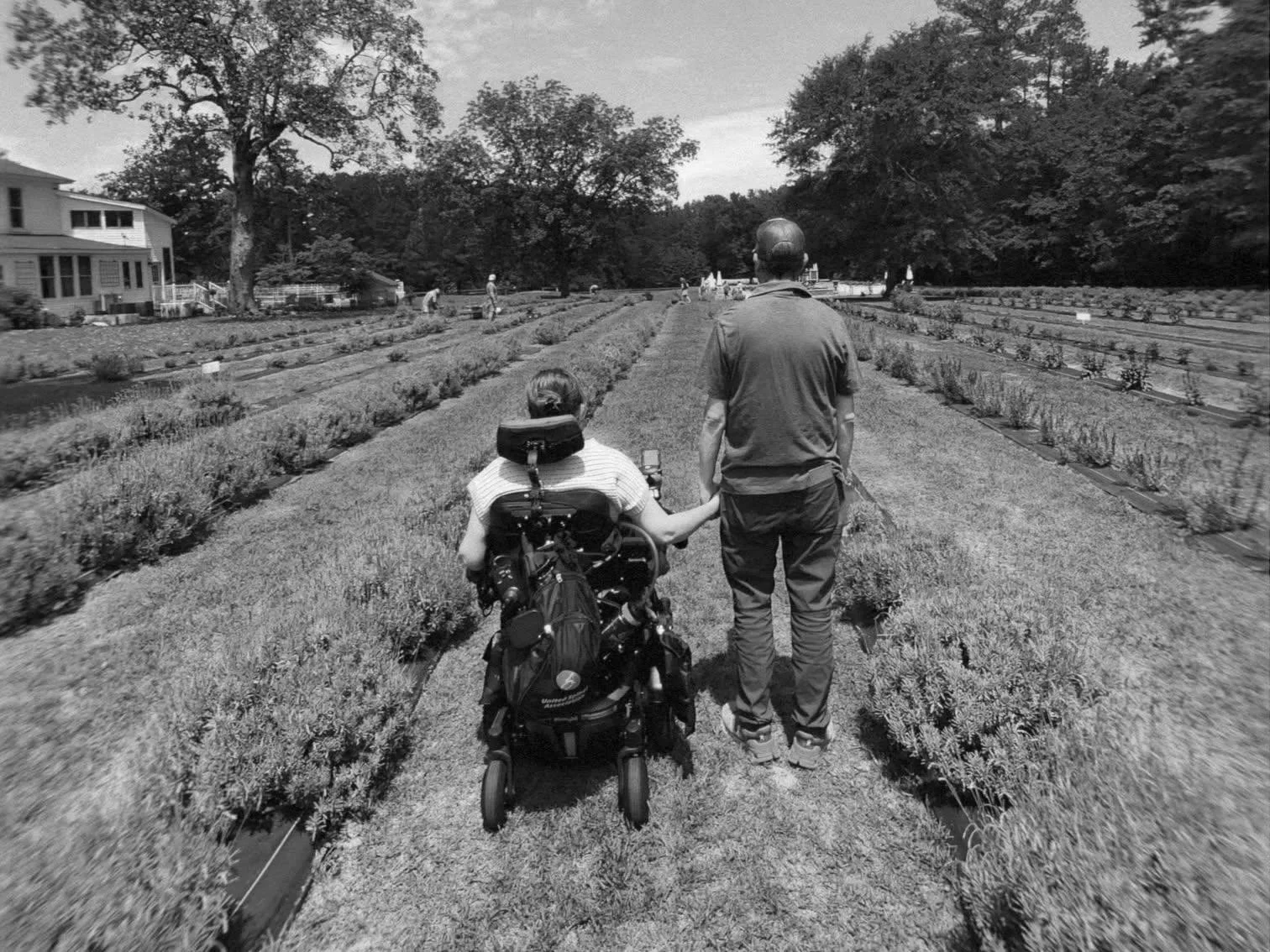
I have said all along that the hardest part of a debilitating injury or illness is witnessing your loved ones having a really hard time witnessing your pain. Some people that are dear in the heart of the disabled person never really come to terms with it, make up stories as to why they don't really need to reach out for months even years… because it's too painful for them.
There are the people who arrive when tragedy first strikes. They text. They send cards. They bring meals. They send flowers. They sit beside the hospital bed and cheer you on. Their concern is so magical, kind and sincere, and their kindness matters.
But then there are the people who stay.
They are still there after the flowers have wilted, the meal train has ended, and everyone else has returned to their normal lives.
They are there when the crisis is no longer new.
When recovery has become repetitive.
When progress is measured in inches instead of miles.
When there is no dramatic breakthrough to celebrate—only another appointment, another difficult transfer, another sleepless night, another moment of choosing not to give up.
These are the people who help build recovery.
Not because they have all the answers.
Not because they always know what to say.
But because they keep showing up.
They learn that healing rarely happens in a straight line. They understand that a good day does not mean the hard days are over, and a setback does not mean all progress has been lost. They do not disappear when hope becomes complicated.
They make room for grief without demanding that it be resolved.
They celebrate victories that the rest of the world may never understand.
A stronger breath.
A small movement.
A stable blood-pressure reading.
A shower completed safely.
A meal eaten without difficulty.
A day without infection.
A moment of laughter that feels almost like the person you used to be.
The people who stay understand that these moments are not small at all.
After a life-changing injury or illness or diagnosis, you quickly discover that independence is not the only measure of strength. Sometimes strength is allowing someone else to help you. Sometimes courage is trusting another person with the parts of life you once handled without thought—dressing, bathing, transferring, preparing a meal, getting into bed.
There is a vulnerability in needing people that few understand until they have lived it.
And there is a particular kind of grace in the people who meet that vulnerability without making you feel like a burden.
They preserve your dignity when your body will not cooperate.
They remind you that needing care does not make you less capable, less valuable, or less worthy of love.
They do not reduce you to the accident, the diagnosis, the wheelchair, or the list of things you can no longer do.
They still see you.
The people who stay may become tired. They may become frustrated. They may grieve, too. Staying does not mean being endlessly strong or never getting it wrong.
It means returning after the difficult conversation.
Trying again after the exhausting day.
Learning what they do not understand.
Apologizing when necessary.
Making adjustments.
Choosing presence over perfection.
Recovery is often described as though it belongs entirely to the injured person—as if determination alone can rebuild a life.
But recovery is rarely a solo act.
It is built by spouses who rearrange their lives.
By family members who learn new forms of care.
By friends who continue extending invitations, even when participation looks different.
By therapists who refuse to see a plateau as the end of possibility.
By caregivers who protect dignity in the most intimate moments.
By doctors and nurses who listen.
By communities that make room.
By the person who sends a message months—or years—later and still genuinely wants to know how you are doing.
These people become part of the architecture of healing.
They cannot take away the pain. They cannot restore everything that was lost. They cannot walk the road for us.
But they can make certain we do not walk it alone.
And perhaps that is one of the deepest lessons recovery teaches us: healing is not only what happens inside the body.
Healing also happens between people.
It happens when someone sits beside you in the uncertainty.
When they help carry what has become too heavy.
When they believe in your future on the days you cannot see it for yourself.
When they continue to recognize your humanity beneath all the medical language, physical limitations, fear, and fatigue.
The people who stay may never fully understand how much their presence matters.
They may think they are simply making dinner, driving to an appointment, adjusting a pillow, answering the phone, calling us or our beloved caretaker, inviting us to coffee or dinner, making plans to go to a concert together, sending another kind note and a check for our expensive rehabilitation or sitting quietly beside us.
But they are doing something far greater.
They are creating safety.
They are protecting hope.
They are reminding us that our changed life is still a life worth showing up for.
Recovery is built through medicine, movement, nourishment, sleep, faith, and time.
But it is also built through devotion.
Through the hands that help.
Through the hearts that remain.
Through the people who keep showing up long after showing up stops being easy.
To the people who stay:
You may not be able to heal the injury.
But your presence helps heal the person.
And sometimes, your steady love becomes the bridge between the life that was lost and the life that is still waiting to be built.
May we reach the next horizon together?